Research & Insights
In-depth analysis, white papers, and frameworks for transformation leaders who want to go deeper.
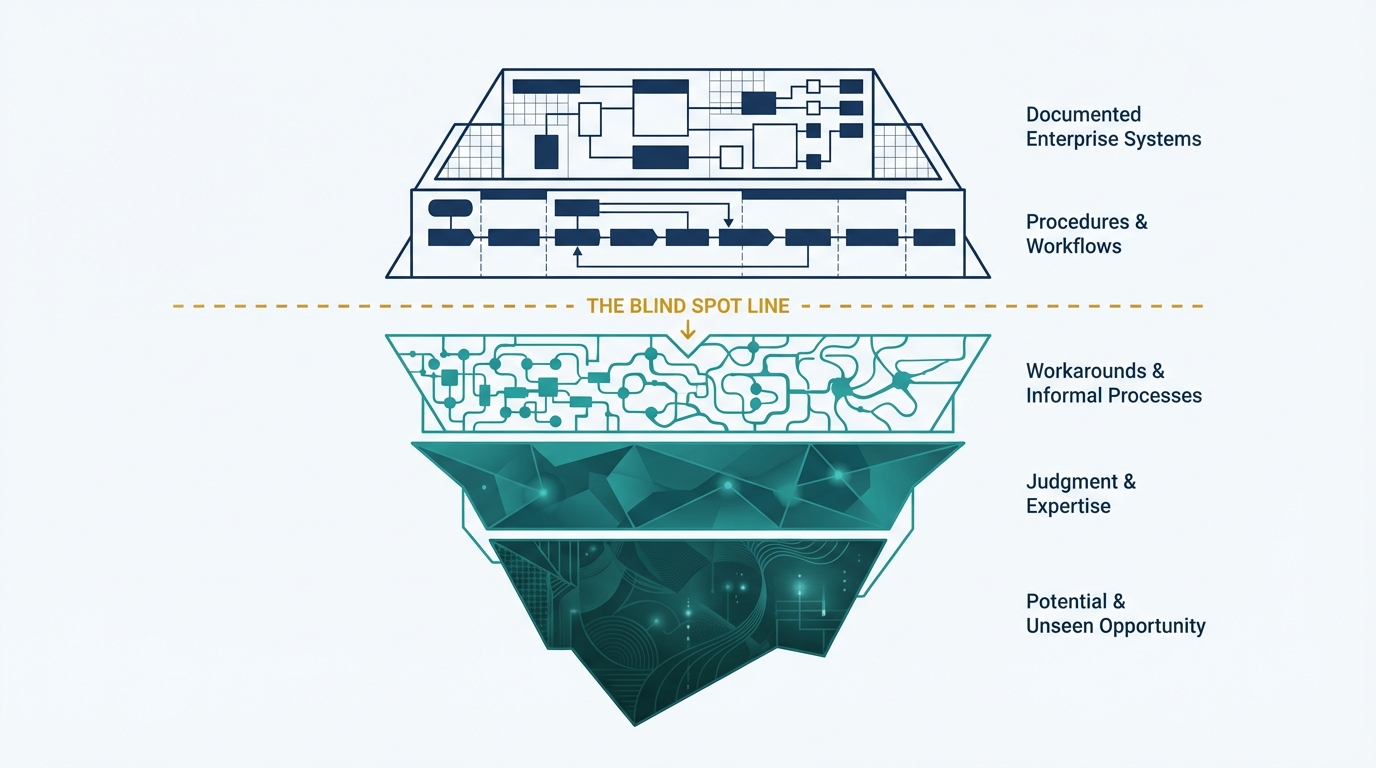
The Five-Layer Activity Model: Why Enterprise Transformation Addresses Two Layers and Misses Three
88% of enterprises adopt AI. 6% capture value. Approximately 164,000 US mid-market enterprises sit in the Frozen Middle — AI installed, value unrealised. The gap is not technology. Transformation programmes address two layers of enterprise work and systematically miss the three where value lives. This paper defines the Five-Layer Activity Model in full: detailed layer definitions with technology mapping, the structural forces that preserve the blind spot, four transformation failures diagnosed through the five-layer lens, the complete 27-question L4-to-L1 discovery protocol, the Ambidextrous Operating Logic, the O2O methodology mapping, academic grounding in tacit knowledge and institutional theory, and the evidence base from independent validation, cohort simulation, and practitioner case studies. It is the diagnostic framework for Transformation Capability Management.
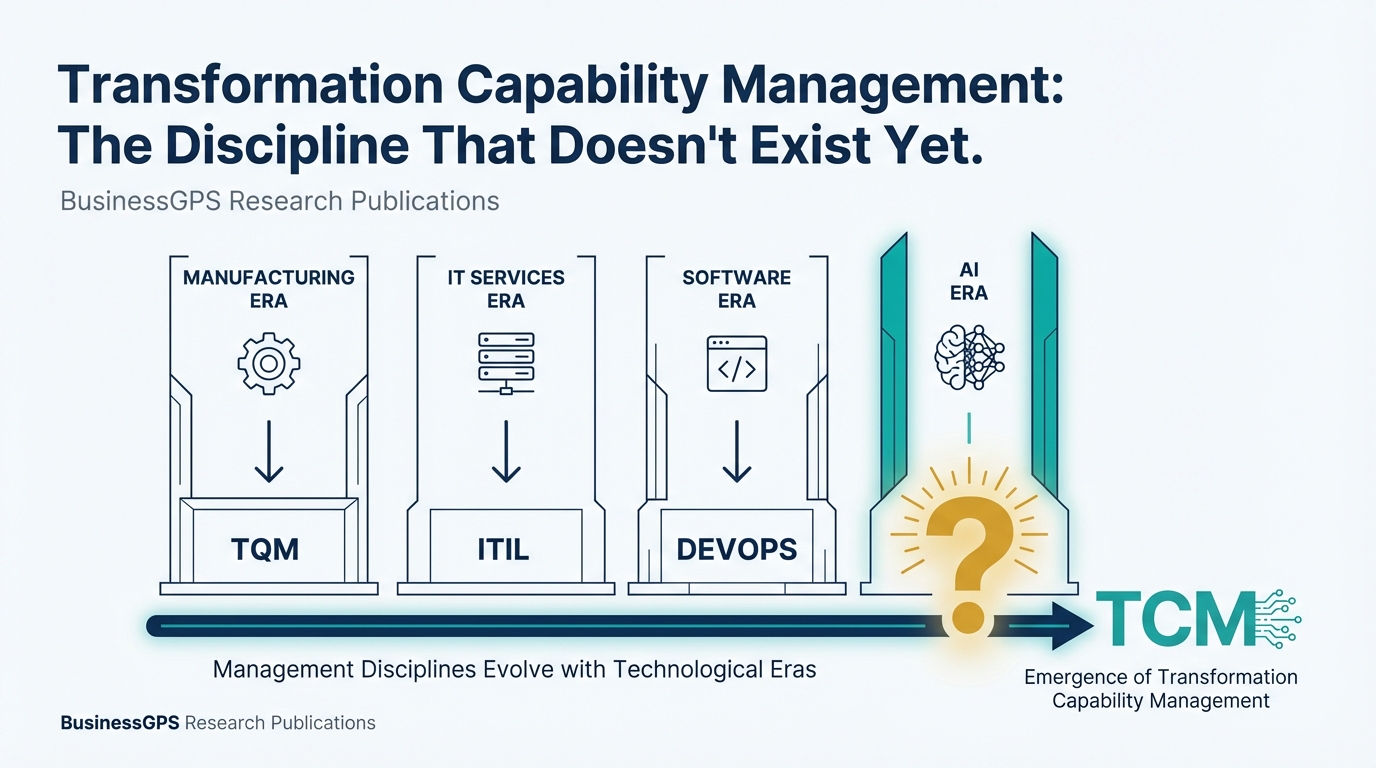
Transformation Capability Management: The Discipline That Doesn't Exist Yet
Every major technology era eventually produces a discipline for the receiving side. Manufacturing got TQM. IT services got ITIL. Software delivery got DevOps. Business Process Re-engineering (1993) attempted the receiving discipline for the client-server era and failed at execution. The AI era has not produced its equivalent — yet. This paper introduces Transformation Capability Management (TCM), presents the evidence base from 250 years of industrial transitions through to 2026 enterprise AI data, connects the Five-Layer Activity Model and the canonical Core/Context/Signature classification, and argues that managing transition states — not reaching end states — is the active ingredient the industry has been missing. v2.0 adds formal academic grounding (Polanyi, Nonaka, Zollo & Winter, DiMaggio & Powell, Hammer & Champy as cautionary sequence), labour and ethics dimension, explicit boundary conditions, formal conflict-of-interest disclosure, and full bibliography.
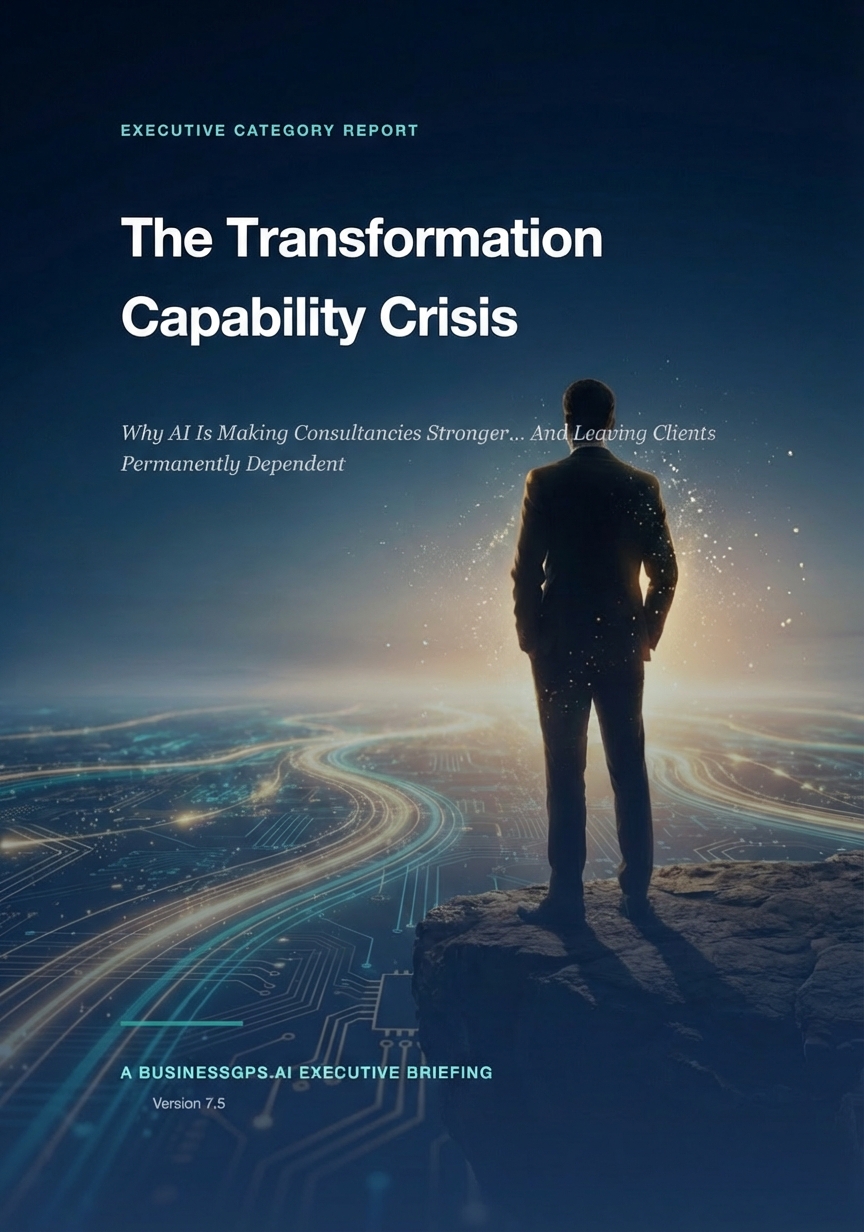
The Transformation Capability Crisis: Why 72% of Transformations Fail
The $3.9 trillion question: AI is making your consultants faster and more profitable. But it's also making you more dependent. This report examines why transformation capability — not consulting — is the real strategic asset.